
HOS Compliance and Truck Parking: How to Avoid Violations on the Road
FMCSA hours-of-service rules assume parking is available — but reality doesn't always cooperate. How to stay HOS-compliant without sacrificing safety.

If you drive a commercial motor vehicle, you’ve likely felt the pressure of the clock. The 11-hour driving limit. The 14-hour on-duty window. The 30-minute break that somehow never comes at a convenient time. Hours of Service (HOS) regulations exist for a reason: truck driver fatigue is a direct contributor to serious crashes. But here’s the problem most drivers face: the rules assume you’ll have a place to park when you need to stop. Reality doesn’t always cooperate.
The FMCSA’s hours of service rules are non-negotiable. Violations carry real consequences. And the thing that trips up more drivers than almost anything else isn’t malicious compliance, it’s simply running out of legal parking options at the wrong time. This post breaks down how HOS works, where the parking problem fits in, and what you can do to stay compliant without sacrificing your schedule or your safety.

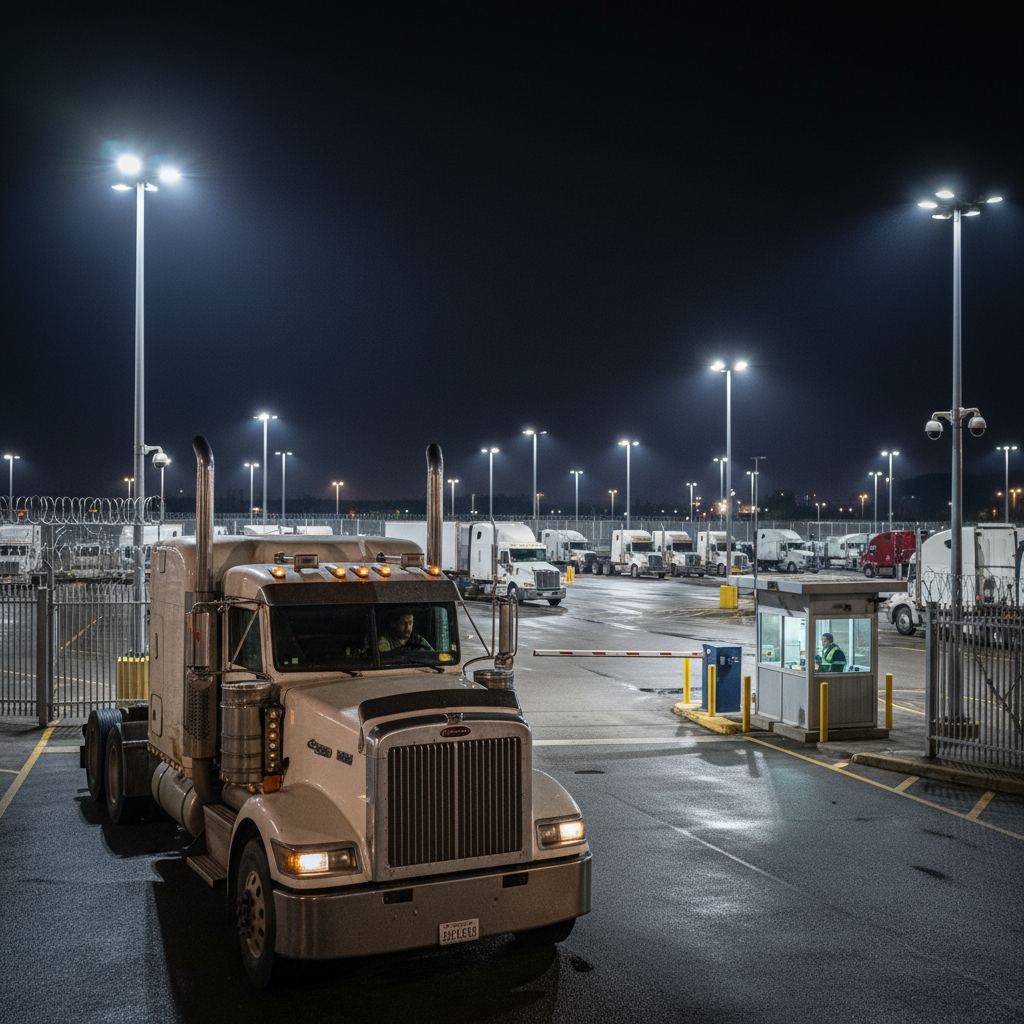
Secure truck parking is essential for HOS compliance — SafeStop in DFW
The Core HOS Rules You Need to Know
The FMCSA sets four primary limits that govern when you must stop driving. These apply to property-carrying drivers operating under the standard rules.
11-Hour Driving Limit
You can drive a maximum of 11 hours after 10 consecutive hours off duty. Once you hit that 11-hour mark, you’re done driving for the day, regardless of what your on-duty clock says. This rule is straightforward in theory, but it becomes a problem when you’re 45 minutes from a safe parking spot and your clock runs out on a rural highway with no lot in sight.
14-Hour On-Duty Window
This is the rule that catches many drivers off guard. You have a 14-hour window that starts when you go on duty, and it doesn’t pause. It doesn’t matter if you’ve driven for only 4 hours. If you’ve been on duty for 14 hours, you can’t drive a commercial vehicle, even if you’ve taken a 10-hour break recently. This window includes loading, unloading, and all other work tasks, not just time behind the wheel.
The 14-hour rule is where parking availability becomes a strategic concern. If you’re stuck in traffic for three hours near a major city and can’t find parking, you might reach your 14-hour limit before you can legally park.
30-Minute Break Requirement
After driving for 8 cumulative hours, you must take at least a 30-minute break. This break must be spent in a status that doesn’t count as on-duty time (off duty, sleeper berth, or passenger seat). The break can be split in some cases, but the simplest approach is taking one solid 30-minute stop. Finding a safe, legal place to take this break is a daily challenge for many drivers.
70-Hour/8-Day Rule
You cannot drive if you’ve been on duty for more than 70 hours in 8 consecutive days. Each day you drive, you build toward this limit. A 70-hour week sounds like a lot, but when you factor in early arrivals, late departures, and detention time at shippers and receivers, the hours add up faster than most drivers expect. This rule is designed to prevent cumulative fatigue from building up over time.
Understanding the four core HOS limits every truck driver must follow
Why Parking Availability Directly Impacts HOS Compliance
The FMCSA writes the rules as if parking is infinite. In practice, it’s not. Here’s how the parking shortage creates compliance problems.
The Clock Doesn’t Stop
The 14-hour on-duty window is the biggest culprit. Unlike the 11-hour driving limit, which resets after your 10-hour break, the 14-hour clock is a straight countdown from the moment you sign on. Every minute you spend waiting at a shipper, sitting in traffic, or driving to a parking location counts against you.
If you arrive at a crowded truck stop at hour 12 of your on-duty window and there’s no space, you face a difficult choice. You can park illegally (risking fines and out-of-service orders), keep driving past your limit (a serious violation), or shut down in an unsafe location. None of these options are good.
The 30-Minute Break Becomes a Stress Test
Taking a 30-minute break should be simple. In reality, finding a legal, safe parking spot for a half-hour stop during peak hours can be nearly impossible at some truck stops. Drivers end up skipping breaks to keep moving, which creates a separate violation. Or they idle in parking lots hoping no one notices, which creates safety and environmental issues.
Running Out of Hours Near Urban Areas
Major metropolitan areas like Dallas-Fort Worth have enormous freight volume and limited truck parking. The problem isn’t just a lack of spaces, it’s that demand fluctuates wildly. A lot with 50 open spots at 2 PM might have zero at 9 PM. When your 14-hour clock is winding down and you’re navigating city traffic, the last thing you need is to circle a dozen full lots.
This is exactly where SafeStop comes in. Located in the DFW area, we maintain consistent availability so you can plan your stops around your hours, not around whatever lot happens to have space when you arrive. Check out our amenities — well-lit spaces, driver facilities, and 24/7 monitoring designed for CDL holders running on a tight schedule.
ELD Compliance and Parking
Electronic Logging Devices (ELDs) have made it much harder to fudge hours. The digital record is automatic, and enforcement officers can access your entire driving history with a plug-in. This is good for road safety, but it also means there’s no more “guessing” whether you were actually resting.
Here’s how ELDs interact with parking decisions:
Real-time visibility. Your fleet manager can see exactly where you are and whether you’re approaching an HOS limit. This helps with dispatch decisions, but it also means you need to communicate early when you’re running low on hours.
Hostile parking situations. If you’re stuck at a shipper for 4 hours and your ELD shows you’re on duty the entire time, that counts against your 14-hour window. ELDs don’t distinguish between driving and sitting in a parking lot waiting. This makes advance parking planning even more important.
Audits and inspections. During a roadside inspection, officers can pull your ELD records and see your last several days of driving. Violations show up immediately. A single 11-hour driving violation can result in a fine and an out-of-service order, which means your truck sits while you wait for the violation to clear.
Practical Strategies to Stay Compliant
You can’t control traffic, shipper delays, or lot availability at every stop. But you can build habits that reduce your risk of violations.
Plan your stops around your 14-hour window, not just your 11-hour drive time. Map out where you’ll be at hours 10, 12, and 14. If you’re going to be in a high-traffic area during your window’s final hours, book parking in advance or leave earlier.
Take your 30-minute break when you hit 8 hours, not later. It’s easy to push through and think you’ll stop in an hour. But an hour later, you might be in an area with no parking. Taking the break early gives you more flexibility.
Use dedicated truck parking when available. Public truck stops near major interstates get crowded during evening hours. Secure lots like SafeStop offer more predictable availability, which means you can actually execute your HOS plan instead of hoping for the best.
Communicate with dispatch early. If you’re approaching your limits and you haven’t found parking, say something. A good dispatcher can help you find a nearby lot or adjust your delivery window. The worst thing you can do is stay silent and hope you make it.
Know the exception rules. There are limited exceptions for adverse driving conditions and the 30-minute break can sometimes be split. But these are narrow exceptions, not workarounds. Don’t count on them as a regular part of your compliance strategy.
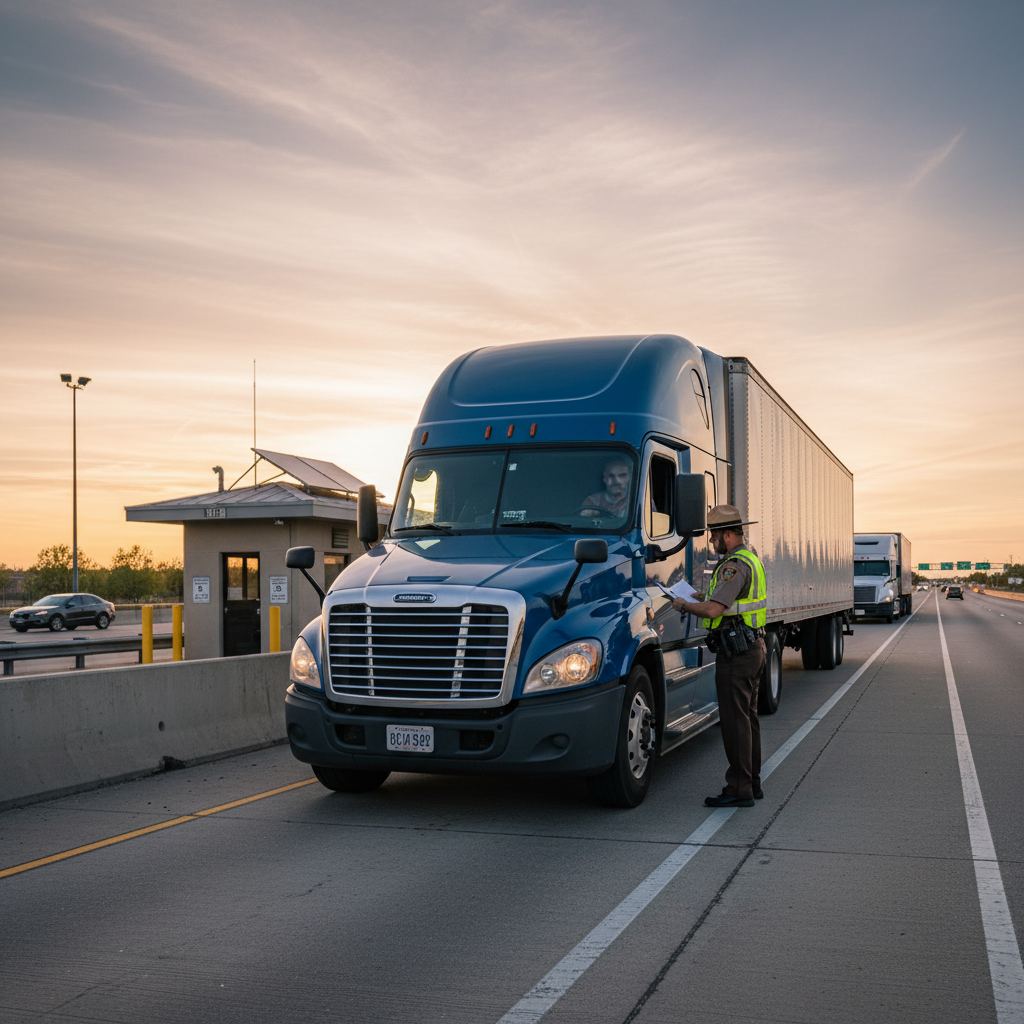
Planning your stops around your HOS window is the key to avoiding violations
The Cost of Non-Compliance
FMCSA violations aren’t just theoretical. Here are the real consequences:
Out-of-service orders. If you’re caught driving while in violation of HOS limits, you can be placed out of service for 10 hours (for the 11-hour or 14-hour violations). That means your truck doesn’t move, your delivery is late, and you lose a day’s income.
Fines. HOS violations carry fines ranging from around $1,000 to over $16,000 per offense, depending on the severity and whether it’s a repeat violation.
Insurance impacts. Repeated violations can affect your insurance premiums and your carrier’s safety rating. Poor safety ratings can lead to shutdown orders from the FMCSA.
CSA scores. HOS violations count toward your Compliance, Safety, Accountability (CSA) score. High scores trigger increased inspections, which means more chances for additional violations to surface.
None of this is worth risking to save 20 minutes of searching for parking.
Where Secure Parking Fits Into Your Compliance Strategy
The relationship between HOS compliance and truck parking isn’t complicated: you can’t comply if you can’t park. The regulations assume drivers have access to safe, legal parking when they need it. When that assumption fails, drivers bear the consequences.
Choosing a secure, reliable parking facility isn’t just about peace of mind. It’s a compliance tool. When you know you have a spot waiting, you can plan your day around your hours instead of scrambling at the last minute. You can take your break when it makes sense, not when you finally find an open space. You can shut down at hour 14 with confidence instead of hoping you find somewhere before the clock runs out.
SafeStop is designed specifically for professional drivers who need predictable, secure parking in the DFW area. We maintain availability so you can execute your HOS plan without the last-minute stress of finding a lot that’s full. Learn about our facility and what makes our parking different.
Final Thoughts
HOS compliance isn’t optional, and it’s not going away. ELDs have made enforcement stricter, and the FMCSA shows no signs of softening the rules. The drivers who stay out of trouble aren’t the ones who push the limits; they’re the ones who plan around them.
Parking is a compliance issue. Every hour you spend searching for a spot or parked in an unsafe location is an hour you’re not in control of your schedule. Secure, reliable truck parking isn’t a luxury, it’s a necessity for staying legal and staying safe.
If you run routes through the Dallas-Fort Worth area, plan your stops around your hours, not around whatever happens to be available. SafeStop gives you one less thing to worry about. Visit our FAQ for answers to common questions about reservations and availability.
SafeStop provides 24/7 secure truck parking in DFW with modern amenities, professional security, and consistent availability. Book your spot or learn more at thesafestop.com.
External Sources:
- FMCSA - Hours of Service Regulations
- FMCSA - ELD Rule Overview
- OOIDA - HOS Compliance Guide for Drivers
Frequently Asked Questions
What are the FMCSA hours of service limits for truck drivers?
The FMCSA sets four primary HOS limits: an 11-hour driving limit after 10 hours off duty, a 14-hour on-duty window, a 30-minute break after 8 cumulative hours of driving, and a 70-hour limit over 8 consecutive days. These rules apply to property-carrying CMV drivers operating under standard regulations.
How does the 14-hour on-duty window work?
The 14-hour window starts the moment you go on duty and does not pause. Even if you take a break or wait at a shipper, that time still counts against your 14 hours. Once the 14-hour window expires, you cannot drive a commercial vehicle until you take 10 consecutive hours off duty, regardless of how many hours you actually drove.
Why is truck parking important for HOS compliance?
HOS rules require you to stop driving at specific intervals, but they assume parking is available when you need it. When you can’t find a safe, legal parking spot as your hours expire, you face a choice between driving in violation, parking illegally, or shutting down in an unsafe location. Reliable truck parking eliminates this compliance risk.
How do ELDs affect HOS enforcement?
Electronic Logging Devices automatically record driving time and cannot be manually altered the way paper logs could. During roadside inspections, officers can pull your full ELD history, making violations immediately visible. This stricter enforcement means advance planning for parking and rest stops is more important than ever.
What are the penalties for HOS violations?
HOS violations can result in out-of-service orders (typically 10 hours), fines ranging from approximately $1,000 to over $16,000 per offense, negative impacts on your CSA safety score, increased insurance premiums, and potential shutdown orders for carriers with poor safety ratings.
Where can I find secure truck parking in the DFW area?
SafeStop offers 24/7 secure truck parking in the Dallas-Fort Worth area with well-lit spaces, driver facilities, professional security, and consistent availability. You can book your spot online or visit our FAQ page for more information about reservations and amenities.