
Truck Parking Technology: How Smart Lots Are Changing Driver Safety
Real-time availability, monitored cameras, online reservations, and access technology - how smart-lot infrastructure is reshaping truck driver safety in 2026.
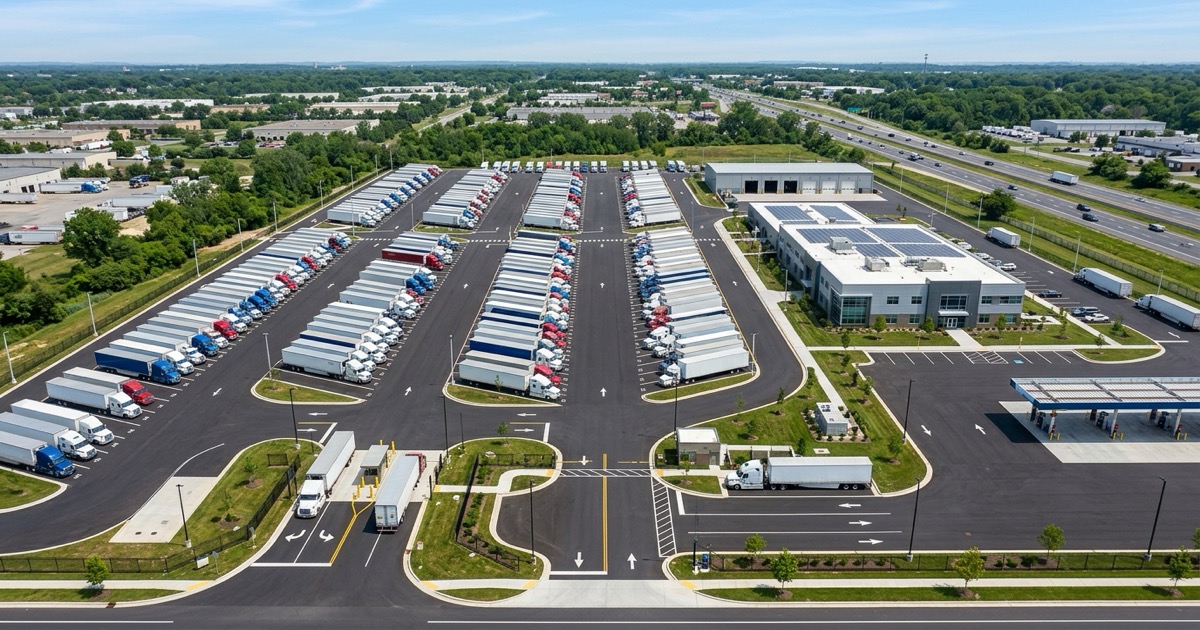
How Smart Truck Parking Technology Is Changing Driver Safety
For decades, finding safe truck parking meant relying on word of mouth, circling rest areas at 10 PM, or settling for an unlit patch of gravel off a highway exit. Drivers rolled the dice every night, and the odds were not always in their favor. Cargo theft, property crime, and fatigue-related incidents plagued the industry because the infrastructure simply did not exist to match the demand.
That is changing fast. A new generation of truck parking technology is transforming how drivers find, reserve, and use parking facilities. From real-time availability apps to monitored camera systems, smart lots are rewriting the rules of driver safety. This guide covers the technologies reshaping truck parking, what they mean for your daily routine, and how to use them to protect yourself and your cargo.
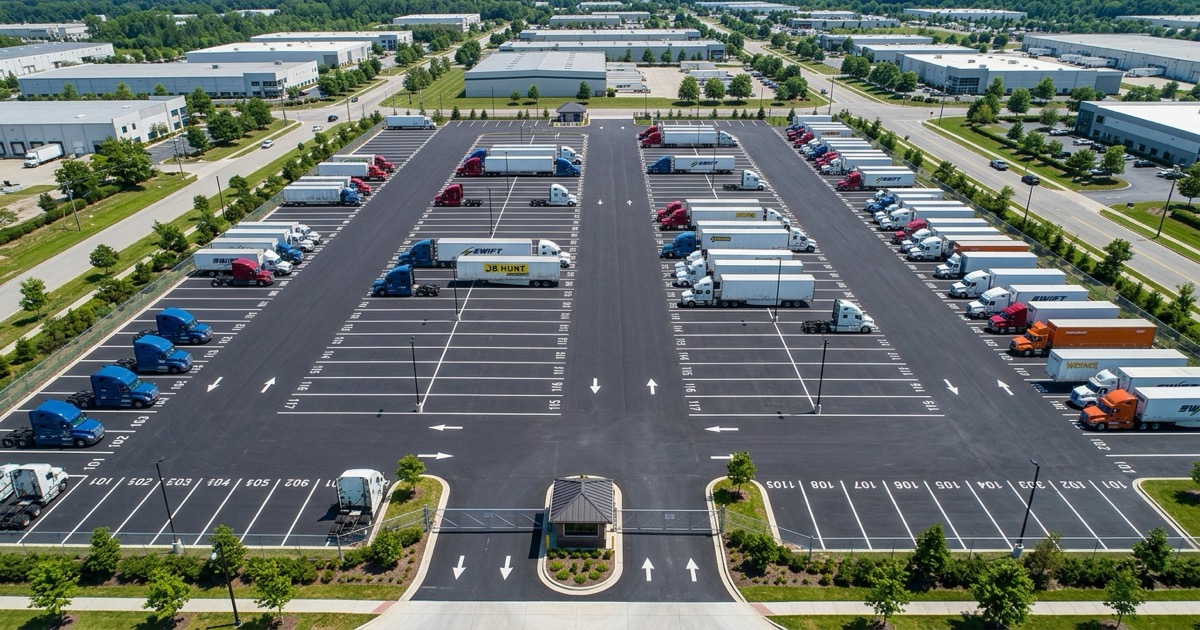
Why Technology Matters for Truck Parking Safety
The FMCSA reports that fatigue is a contributing factor in roughly 13 percent of large-truck crashes. One of the biggest contributors to fatigue is the time drivers spend searching for parking instead of resting. A 2023 survey by the American Transportation Research Institute (ATRI) found that drivers spend an average of 56 minutes per day looking for available parking. That is nearly an hour of unpaid, stressful driving added to an already demanding schedule.
Technology addresses this problem at its root. When you can see real-time availability, reserve a spot before you arrive, and trust that the facility is monitored, you eliminate the variables that make parking dangerous. You rest sooner. You park in better locations. You reduce your exposure to theft and vandalism.
The benefits extend beyond individual drivers. Fleet managers can track where their trucks are parked. Dispatchers can route drivers to verified secure facilities. Insurance companies are beginning to offer reduced premiums for fleets that use monitored parking, recognizing that technology-enabled parking reduces claims.
The Cost of Parking Without Technology
Without smart parking tools, drivers face a cascade of risks:
- Cargo theft: Unmonitored lots are prime targets. The FBI estimates that cargo theft costs the U.S. economy over $1 billion annually, and a significant share happens in unsecured parking areas.
- Personal safety: Isolated, unlit lots expose drivers to assault, vehicle break-ins, and other personal crimes.
- HOS violations: When you cannot find parking and your hours of service clock runs out, you face an impossible choice: violate HOS rules or park somewhere unsafe. As we discuss in our guide to reserving truck parking spots in Dallas, advanced booking eliminates this dilemma.
- Vehicle damage: Unmanaged lots with tight turnarounds and no attendants see higher rates of vehicle damage, from sideswipes to broken mirrors to tire damage from debris.
Real-Time Parking Availability Systems
The single most impactful technology in truck parking is real-time availability tracking. Systems like ParkMYRig, TruckerPath, and proprietary apps operated by parking facilities give drivers a live view of how many spots are open at any given location.
How It Works
Most real-time systems use one of two approaches:
- Sensor-based: In-ground or overhead sensors detect whether a spot is occupied. These are highly accurate and require infrastructure investment from the lot operator.
- Crowd-sourced: Drivers report availability through an app. Less accurate and dependent on user participation, but covers more locations since it requires no hardware at the facility.
The best systems combine both. Sensor-based data gives you verified counts, while crowd reports fill in gaps at facilities that have not invested in hardware.
How to Use Availability Data
Real-time data is most valuable when you build it into your trip planning. Instead of waiting until you are low on hours, check availability 100 to 200 miles ahead of your current position. If your preferred stop is filling up, divert to a backup before it is too late. This is especially critical in high-demand corridors like the I-35 stretch through Dallas-Fort Worth, where overnight parking fills early during peak seasons.
Reservation and Booking Platforms
Availability data tells you where spots exist. Reservation platforms let you claim one before you arrive. This is the next evolution in truck parking technology, and it is transforming driver behavior in meaningful ways.
Platforms like SafeStop allow drivers to book parking in advance, creating a confirmed parking plan before arrival. The benefits are immediate:
- Eliminated search time: No more circling. No more gambling on whether a lot will have space when you arrive.
- More predictable security: Reserved spots can be planned around monitored, gated facilities with the infrastructure you need.
- Better route planning: When you know exactly where you are parking, you can plan your route and arrival time more precisely, reducing HOS pressure.
- Cost predictability: You know the rate before you arrive, avoiding surge pricing or unexpected fees.
As our breakdown of semi-trailer parking checks explains, the peace of mind from a confirmed reservation means you can focus on resting instead of worrying about whether you will find a spot at all.
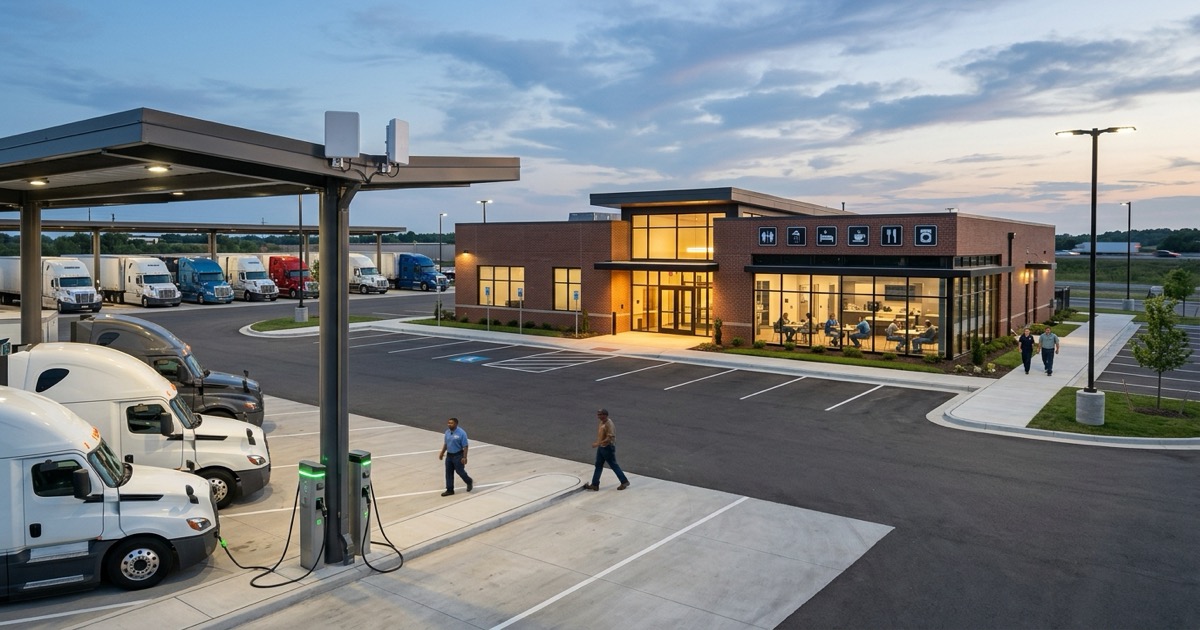
Monitored Cameras and Security Systems
The security technology at modern truck parking facilities has advanced far beyond a single camera at the gate. Today’s smart lots can combine camera coverage, lighting, access control, perimeter awareness, and staff procedures so suspicious activity is easier to notice and respond to.
What Modern Camera Monitoring Looks Like
- Activity review: Camera coverage makes it easier to review unusual movement, vehicles circling the lot, or people approaching equipment without a clear reason.
- Vehicle accountability: Entry processes and gate records help the operator understand who is expected on the property.
- Perimeter awareness: Lighting, fencing, and monitored areas can make unauthorized access easier to detect.
- Incident response: Clear staff procedures help a facility respond when a driver reports suspicious activity.
These systems are part of a broader theft-reduction strategy, not a guarantee. Technology-enabled monitoring works best when it is paired with controlled access, driver check-in procedures, lighting, staff presence, and good driver habits. We explore that layered approach in our article on how reservation-only parking helps reduce cargo theft risk.
Smart Lot Infrastructure: Beyond the Camera
Security cameras are the most visible technology, but smart lots integrate a range of other systems that improve safety and convenience for drivers.
Automated Gate Access
Gone are the days of a clipboard and a manual gate. Modern truck parking facilities use automated access control systems that verify driver identity and reservation status before allowing entry. This serves two purposes: it keeps unauthorized vehicles out, and it creates an audit trail of everyone who enters and exits the facility.
Smart Lighting
LED lighting systems with motion sensors and timers ensure that the lot is well-lit when and where it needs to be, without wasting energy during low-traffic hours. Smart lighting deters criminal activity and helps drivers navigate the lot safely during late-night arrivals and early-morning departures.
Environmental Monitoring
Some advanced facilities monitor environmental conditions including air quality, temperature, and weather. For drivers carrying temperature-sensitive cargo, this data provides an extra layer of assurance that conditions are being tracked even when they are resting.
Connectivity Infrastructure
High-speed WiFi, cellular boosters, and power hookups are increasingly standard at technology-forward lots. These are not luxury amenities. They are safety infrastructure. Drivers need connectivity to access load boards, communicate with dispatch, check weather and road conditions, and use parking availability apps for the next day’s route. Our guide to the best truck parking amenities in DFW covers which facilities offer the strongest connectivity.
Mobile Apps and Driver Tools
The technology revolution in truck parking is most accessible through the smartphone in your pocket. Several apps have emerged as essential tools for safety-conscious drivers.
Parking Discovery Apps
Apps like TruckerPath, ParkMYRig, and SafeStop’s own platform help you find and evaluate parking options based on your current location and route. The best apps include user reviews, photos, and detailed facility information so you can assess safety features before you arrive.
Navigation Integration
The next frontier is deep integration between parking platforms and truck-specific GPS navigation. When your nav system knows where you have a reservation, it can automatically route you there, adjust ETA based on traffic, and alert you if your HOS clock is running low. This eliminates the dangerous practice of navigating to a parking location while driving.
Emergency Features
Some parking apps include SOS buttons that connect directly to the facility’s security team or local emergency services. If you feel unsafe or witness suspicious activity, one tap sends your location and alert to responders. This feature alone can be lifesaving in isolated parking situations.
What Fleets Should Look For
For fleet managers and owner-operators, choosing the right parking technology partners is a strategic decision. Here is what to prioritize:
- Verified security: Do not just take a lot’s word for it. Verify that cameras, lighting, access control, and staff procedures are operational. Ask about incident response protocols.
- Reservation reliability: Test the booking platform before relying on it. Does it confirm your spot? What happens if you arrive late? Is there a no-show policy?
- Integration: The best platforms integrate with fleet management systems, ELDs, and dispatch tools. This gives your team visibility into where trucks are parked without driver intervention.
- Coverage: A platform is only useful if it has facilities along your routes. Check coverage maps before committing to a provider.
Fleets that prioritize secure parking in major metro areas can reduce exposure to cargo loss, insurance claims, and driver stress. The technology investment is easiest to justify when it supports a real parking policy.
The Future of Smart Truck Parking
The pace of innovation in truck parking technology is accelerating. Several developments on the horizon will further transform driver safety:
Autonomous Lot Management
More automated parking facilities, where software helps manage spot assignments, vehicle tracking, and staff workflows, are in pilot testing. These systems are intended to create more consistent parking operations.
Predictive Availability
Machine learning models are being developed that predict parking availability based on historical patterns, weather, events, and economic indicators. Instead of showing you what is available now, these systems will tell you what will be available when you arrive, hours or even a day in advance.
Blockchain-Based Access Control
Some companies are exploring blockchain technology for access control and identity verification. The idea is to create an immutable record of who accessed a facility, when, and for how long, making it nearly impossible to tamper with security logs.
Vehicle-to-Infrastructure Communication
As trucks become more connected, V2I communication will allow vehicles to communicate directly with parking facilities. Your truck could automatically reserve a spot based on your route and HOS status, receive a spot assignment as you approach, and navigate you to the specific space.
Frequently Asked Questions
How does real-time truck parking availability work?
Real-time availability systems use either in-ground or overhead sensors at parking facilities to detect whether individual spots are occupied, or they rely on crowd-sourced reports from drivers using a mobile app. The best systems combine both approaches for maximum accuracy and coverage. Data is transmitted to a central platform and displayed on mobile apps and websites, allowing drivers to check availability before or during their trip.
Is it worth paying for reserved truck parking?
Yes, especially if you regularly drive high-theft corridors or park in major metropolitan areas. The cost of reserved parking, typically $15 to $30 per night, is far less than the potential loss from cargo theft, which averages over $100,000 per incident according to the FBI. Reserved parking also saves you 30 to 60 minutes of search time per night and provides access to secure, monitored facilities with amenities that support rest and productivity.
What security features should I look for in a smart truck parking lot?
Look for facilities with monitored cameras, controlled gate access, perimeter fencing, lighting, and on-site or remote security procedures. The combination of these features creates a layered security approach that can deter crime and support faster response if an incident occurs. Avoid lots that rely on a single camera or no monitoring at all.
Can fleet managers track where their trucks are parked?
Yes. Modern parking platforms integrate with fleet management systems and ELDs, giving dispatchers and fleet managers real-time visibility into where each truck is parked, whether it is at a reserved secure facility or an unmonitored location. This data helps fleets enforce parking safety policies and identify drivers who may be taking unnecessary risks.
Are truck parking apps accurate?
Accuracy varies by platform and the technology behind it. Sensor-based systems at equipped facilities are highly accurate, often above 95 percent. Crowd-sourced apps are less reliable and depend on how many drivers are actively reporting. The best approach is to use apps that combine both data sources and to cross-reference with facility websites or direct calls when availability is critical.
How do monitored camera systems improve truck parking safety?
Frequently Asked Questions
What is a smart truck parking lot?
A smart truck parking lot uses technology like real-time availability sensors, automated gate access, monitored cameras, and mobile apps to improve the parking experience. These systems help drivers find spots faster, improve security, and streamline the check-in process.
How does real-time parking availability work?
Real-time systems use either in-ground sensors, overhead cameras, or reservation-based tracking to detect which spots are occupied. This data feeds into mobile apps or websites so drivers can see open spots before arriving at the facility.
Are smart parking lots more expensive than traditional lots?
Not necessarily. While some smart lots may charge a premium for enhanced security and reservation features, many offer competitive rates. The time and fuel saved by not circling for parking often offsets any price difference.
Do I need a special app to use smart truck parking?
Most smart lots offer both app-based and web-based access. Some facilities allow walk-up registration at the gate, while others require advance booking through their app or website. SafeStop offers multiple ways to reserve your spot.
How do monitored cameras improve truck parking safety?
Monitored cameras can help staff review suspicious behavior, identify unauthorized vehicles, and respond faster when a driver reports a concern. Cameras are strongest when paired with lighting, controlled access, and staff procedures.
Camera systems can support theft prevention by improving visibility around parked trucks, entrances, lanes, and common areas. They do not replace driver checks or facility staff, but they create a stronger record of what happened and can help a facility respond with better information.