
Truck Stop vs. Dedicated Truck Parking Facility: What’s the Difference?
The short version: A truck stop is a multi-service travel center built around fuel, food, convenience retail, and parking.
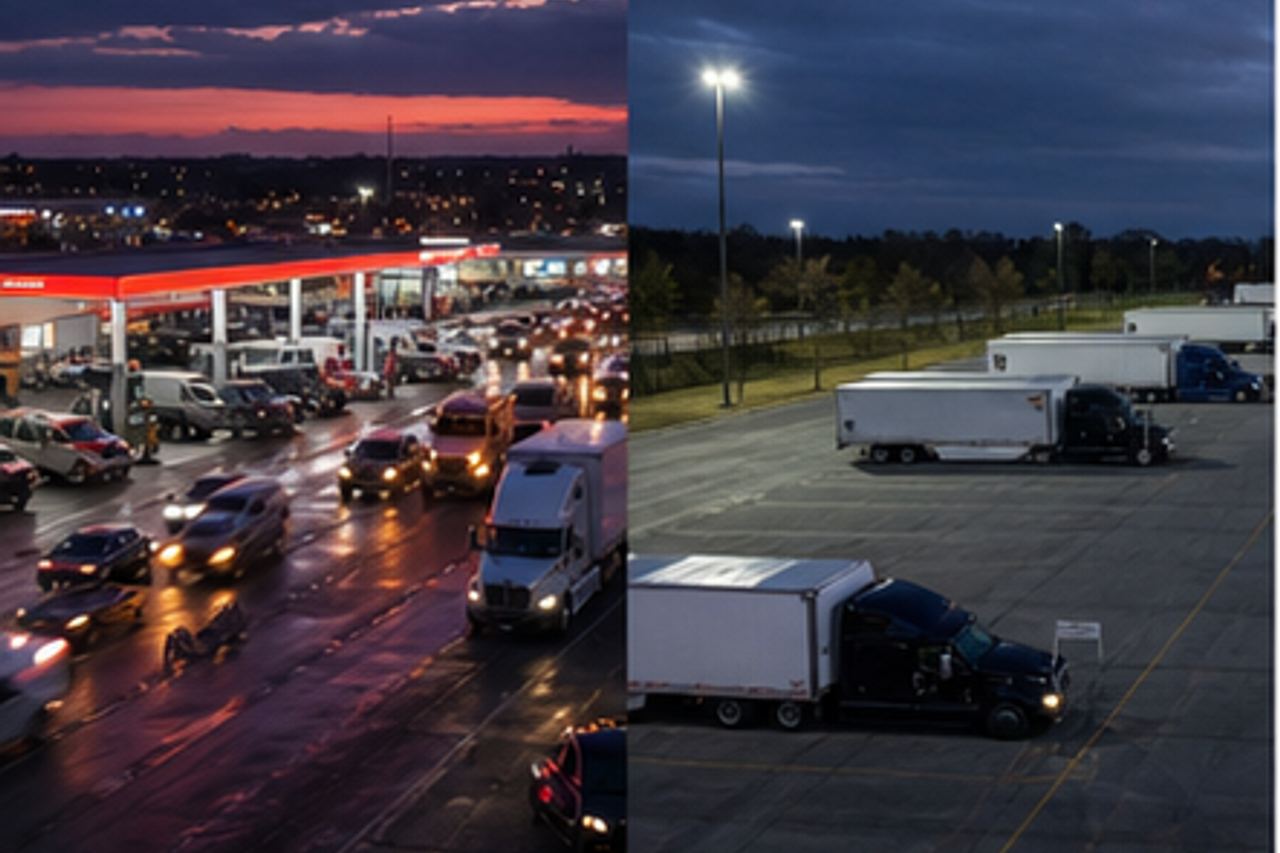
The short version: A truck stop is a multi-service travel center built around fuel, food, convenience retail, and parking. A dedicated truck-parking facility is built primarily to provide authorized commercial-vehicle space, often with reservations, controlled access, and security features. Choose a truck stop for broad road services; choose dedicated parking when space certainty and site control matter most.
The names sound interchangeable because both may have marked spaces for tractors and trailers. The operational difference is the facility’s main job. A truck stop moves a high volume of travelers through fuel, food, retail, and rest services. Dedicated parking focuses on where the truck sits, who can enter, how long it can stay, and what level of certainty the driver has before arrival.
What is a truck stop?
A truck stop or travel center typically combines diesel fuel, convenience retail, restaurants or prepared food, restrooms, showers, truck supplies, maintenance options, and parking. It is often the best all-in-one stop for refueling the truck and the driver. Parking may be free, paid, loyalty-based, reserved, or a mix.
What is a dedicated truck-parking facility?
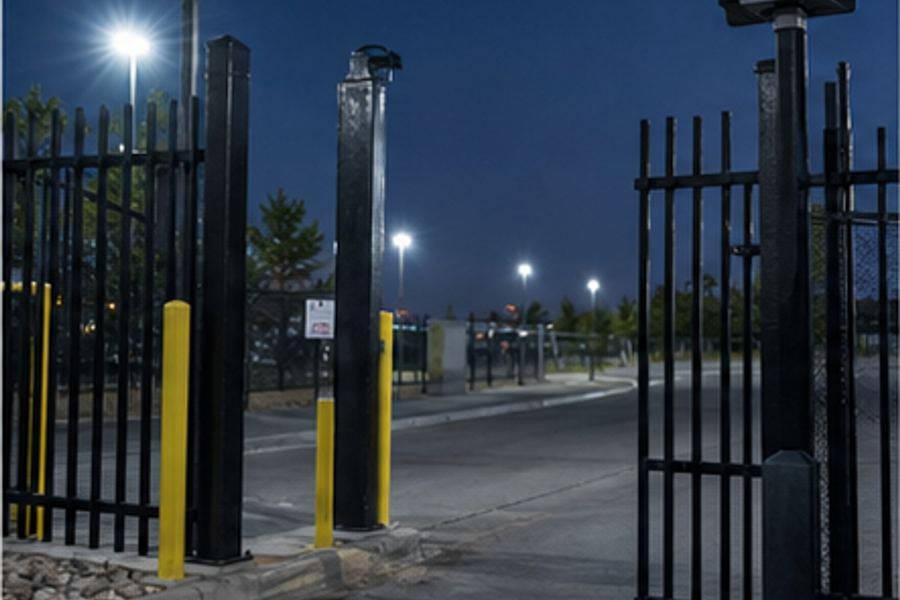
A dedicated facility primarily sells or provides commercial-vehicle parking. It may serve short-term breaks, overnight parking, monthly storage, drop-yard needs, or fleet staging. Features vary, but reservation systems, gated access, fencing, lighting, cameras, license-plate recognition, staff, and controlled entry are more central to the offer.
| Feature | Truck stop / travel center | Dedicated truck parking |
|---|---|---|
| Primary purpose | Fuel, food, travel services, and parking | Authorized commercial-vehicle parking and staging |
| Space certainty | Often first come; some reserved inventory | Frequently reservation or contract based |
| Traffic pattern | High turnover from trucks and passenger vehicles | More controlled commercial-vehicle access |
| Security | Varies by location and parking zone | Often a primary design feature; verify the actual layers |
| Amenities | Broadest range, especially fuel and food | Driver-focused amenities vary; may include showers, lounge, Wi-Fi, and laundry |
| Best use | Fuel, meals, supplies, maintenance, and a combined stop | Guaranteed space, overnight rest, fleet staging, and security-sensitive loads |
Is dedicated parking always more secure?
No label guarantees security. Ask what is actually present and operating: perimeter fencing, gate controls, camera coverage, monitoring, lighting, staff, trailer-door barriers, and access records. A well-run truck stop may be safer than a poorly managed fenced lot. Evaluate the site, not the category.
Which option is better for an overnight break?
Choose the one that is legal, available, route-aligned, and appropriate for the load. A truck stop is ideal if the driver needs fuel, a hot meal, maintenance, and a shower in one stop. A dedicated facility is often better when the priority is a confirmed space, quieter circulation, access control, and proximity to a morning appointment.
Which option is better for fleets?
Fleets may use both. Travel-center networks support fuel purchasing and broad route coverage. Dedicated facilities can support repeat staging, centralized billing, approved security standards, drop-yard needs, or guaranteed space in a chronic shortage market. The right policy maps facility type to the load and the lane.
A truck stop solves many road needs at once. Dedicated truck parking solves the space problem first.
What should a driver check before booking either one?
- Is the space guaranteed for the reservation window?
- Will the tractor-trailer configuration fit, including turn radius?
- What gate or check-in process works after hours?
- Which security features are active and monitored?
- What is included in the rate?
- Can the driver leave and re-enter?
- How far is the site from the route and the next appointment?
Where does SafeStop fit?
SafeStop is a dedicated short-term truck-parking facility in Hutchins, Texas. Parking is reservation based, and the site lists gated access, fencing, lighting, monitored cameras, on-site staff, showers, restrooms, lounge Wi-Fi, laundry, and a dog park. It is located at I-45 Exit 273, about two miles south of I-20.
Review the facility’s current features and reservation rules, or see how SafeStop supports DFW fleet parking and staging.